





Laravel’s built-in event system is elegant, expressive, and productive. For many applications, it is more than enough. But as platforms grow — more users, more services, more real-time needs — traditional queue based events start to show their limits.
This is where Apache Kafka fits naturally into the Laravel ecosystem. This article explains how Kafka modernizes Laravel event systems, using architecture visuals, Laravel specific callouts, and an editorial narrative suitable for production publishing.
The Traditional Laravel Event Model
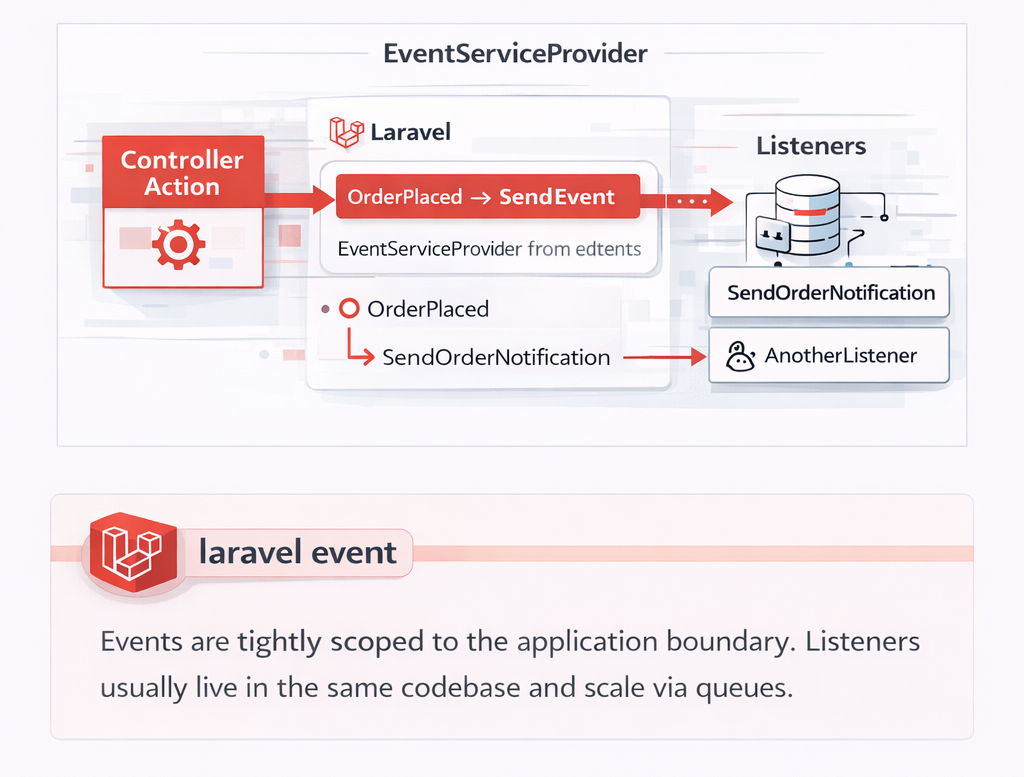
Laravel events are typically local and immediate:
- A controller or domain action fires an event
- The event is registered in EventServiceProvider
- One or more listeners handle side effects
Where This Model Breaks
As applications evolve, this pattern introduces friction:
- Listeners become tightly coupled to event producers
- Queue backlogs grow under burst traffic
- Cross-service communication becomes brittle
- There is no durable event history
At this stage, Laravel events stop being just implementation details — they become platform signals.
Kafka as an Event Backbone for Laravel
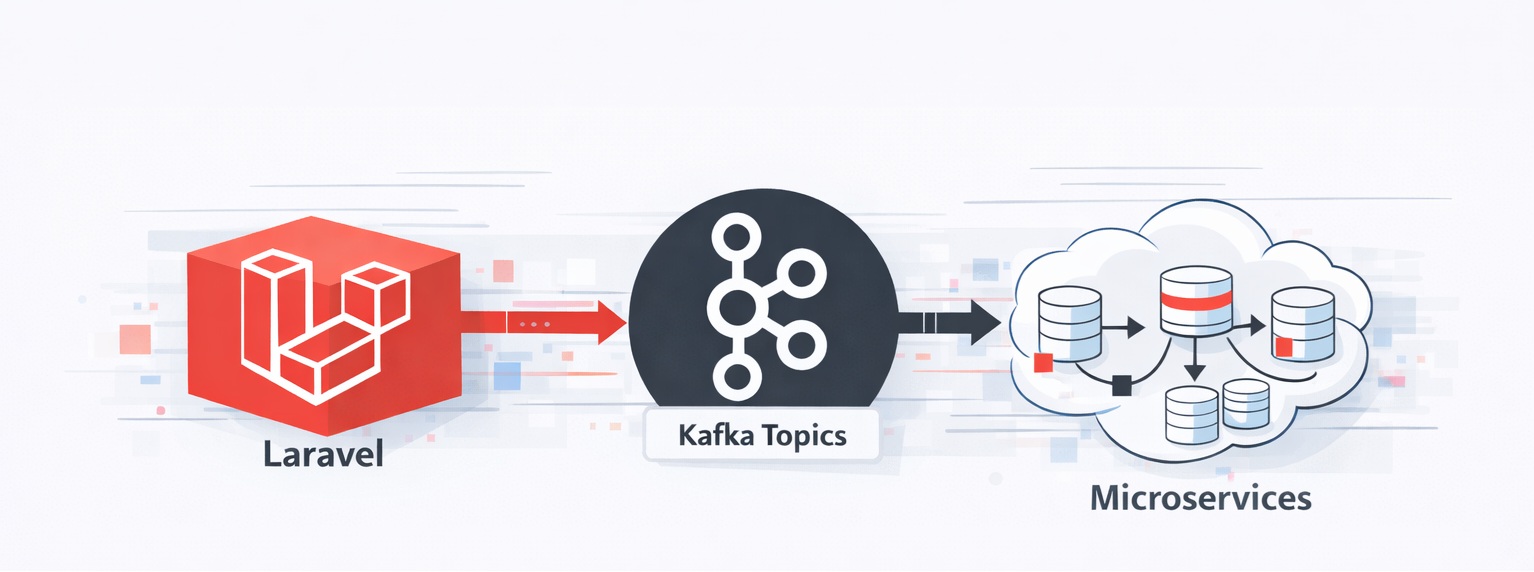
Kafka shifts the architecture from push-based listeners to a central event stream.
Laravel publishes events once. Any number of services consume them independently.
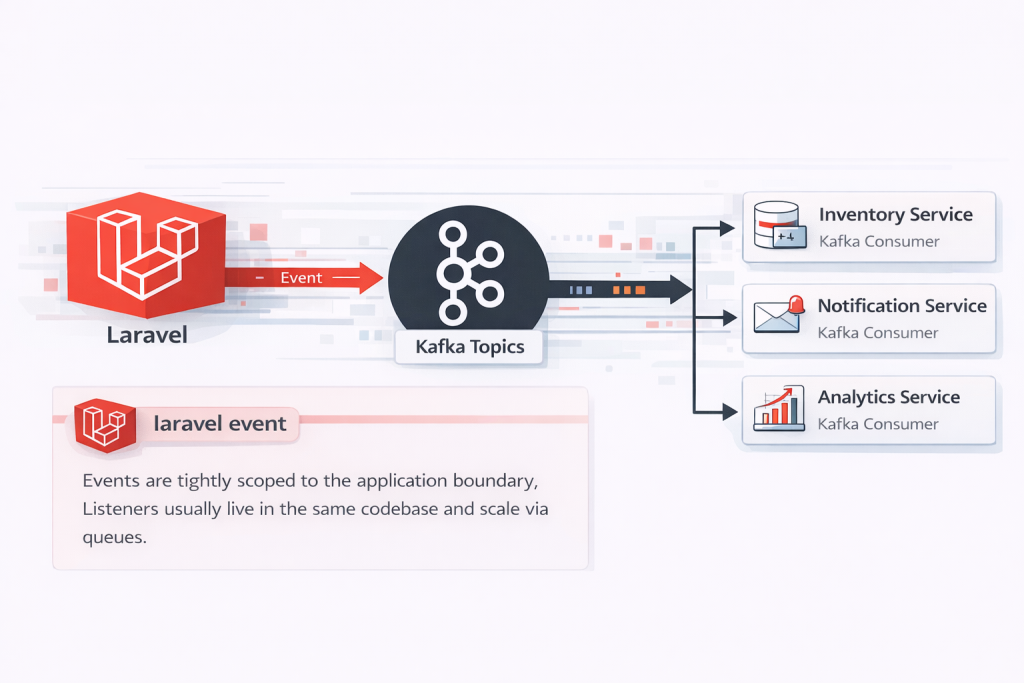
Laravel Callout – From EventServiceProvider to Kafka
Instead of wiring listeners in EventServiceProvider , Laravel emits events outward. Kafka becomes the distribution layer beyond the framework
What This Enables
- Immutable, durable event storage
- Independent scaling of consumers
- Multiple read models from the same event
- Replayability for analytics and recovery
Kafka becomes the system of record for events, not just a queue.
Mapping Laravel Concepts to Kafka
Kafka aligns surprisingly well with Laravel’s mental model:
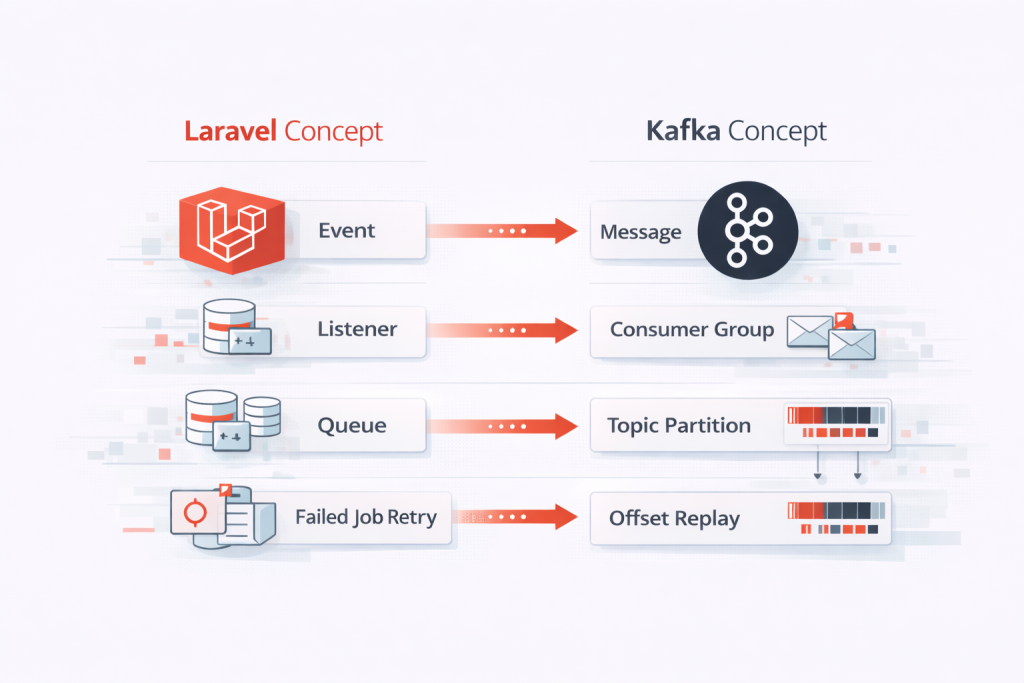
Laravel Callout
The difference is scope. Laravel queues optimize execution. Kafka optimizes system-wide data flow.
Publishing Events from Laravel
In a Kafka-enabled Laravel system, the event lifecycle looks like this:
- A domain event is fired inside Laravel
- The event is serialized into a stable message format
- Laravel publishes the message to a Kafka topic
- External services consume the event asynchronously
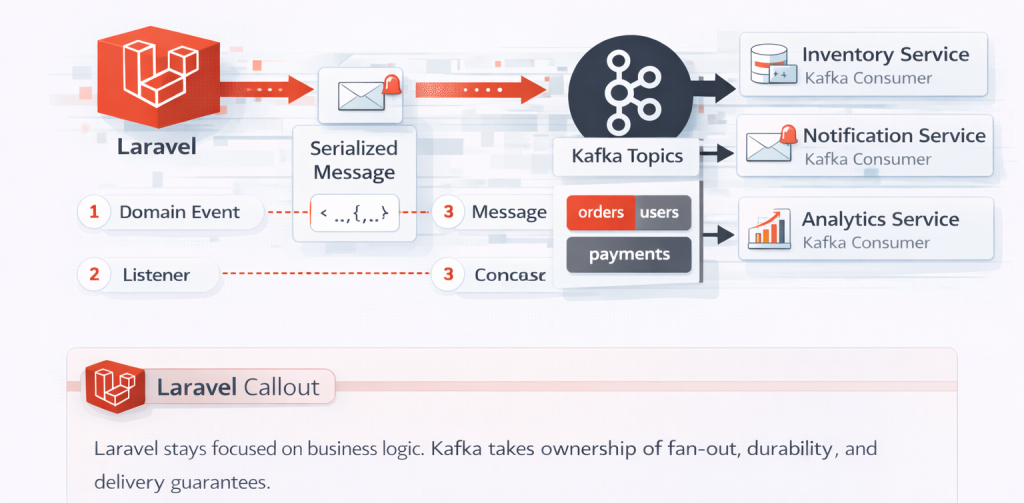
Laravel Callout
Laravel stays focused on business logic. Kafka takes ownership of fan-out, durability, and
delivery guarantees.
Kafka vs Laravel Queues
Kafka is not a replacement for Laravel queues — it solves a different problem.
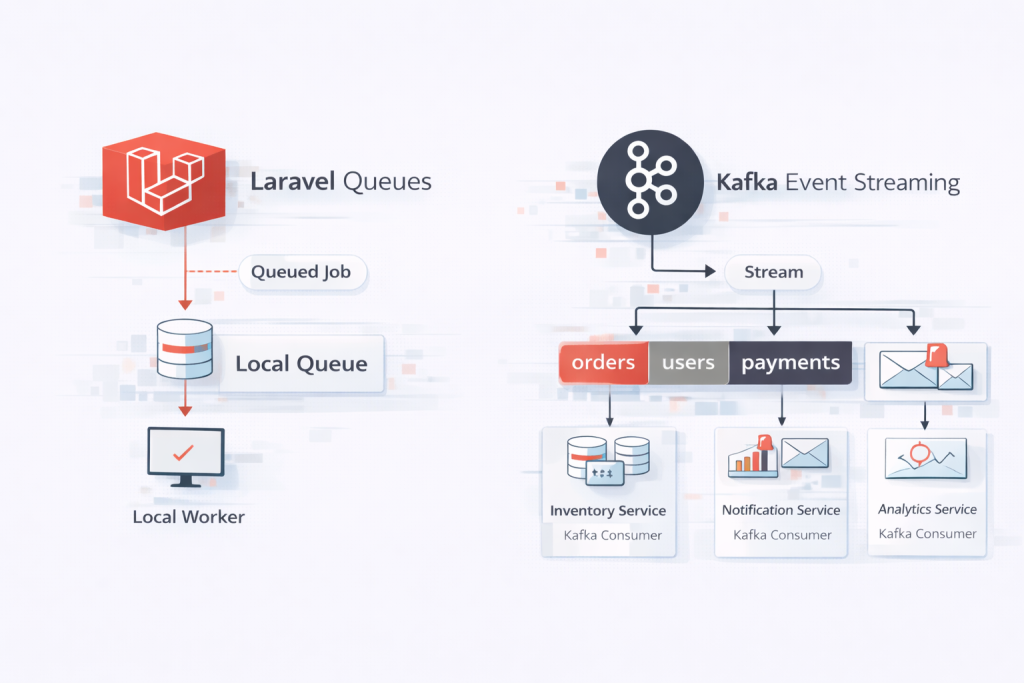
Use Laravel queues when: – You need background jobs – Processing is local to one app – Simplicity matters most
Use Kafka when: – Multiple services need the same event – Events must be replayable – You are building an event-driven platform
When Kafka Is the Wrong Tool
Kafka introduces operational overhead. It is not always the right answer.
Avoid Kafka if:
- You operate a single, small Laravel app
- Traffic is low and predictable
- There is no need for event history
Queues remain a first-class solution in Laravel.
Final Thoughts
Modern Laravel systems increasingly behave like distributed platforms, not just web applications
Kafka allows Laravel teams to treat events as long-lived data, unlocking scalability, resilience, and architectural freedom.
If your events matter beyond a single request, Kafka gives them a future.