





Software development has always moved in cycles. We build, we scale, we fragment — and then we look for ways to simplify again.
For years, the accepted path to multi-platform success was duplication. If you wanted your product available on web, desktop, and mobile, you prepared yourself for three stacks, three pipelines, and three parallel development efforts. It was expensive, but it felt necessary.
Today, that assumption is being challenged.
With Laravel and the emergence of NativePHP, developers can rethink platform expansion entirely. Instead of multiplying codebases, we can centralize them. Instead of rebuilding logic, we can reuse it.
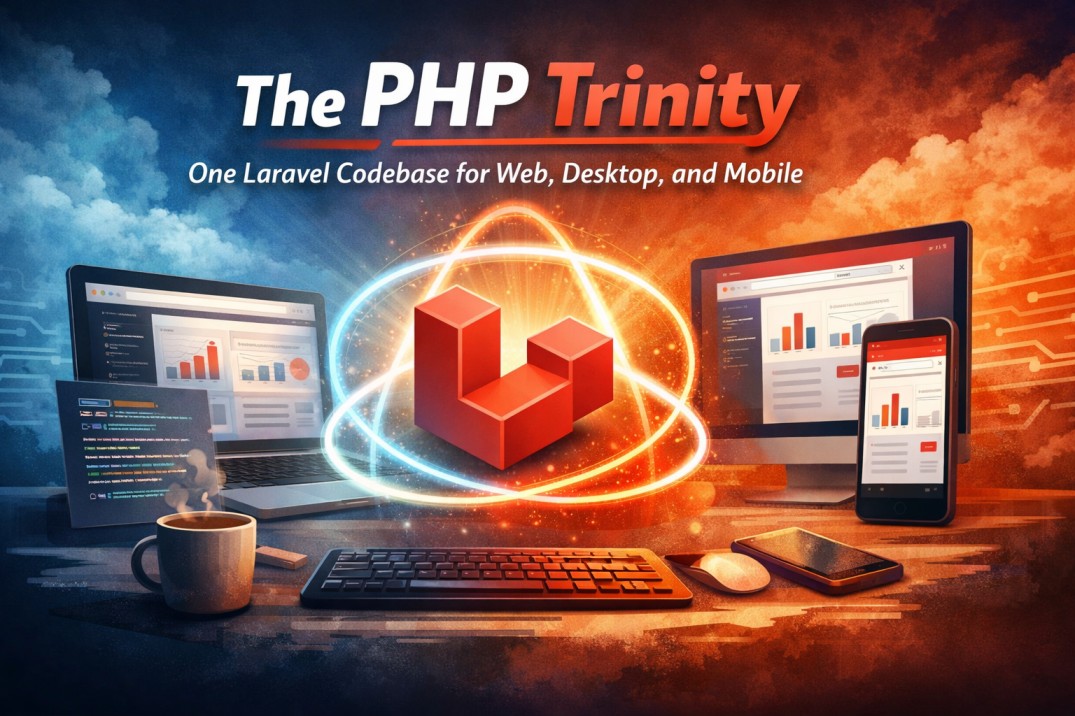
This is what we call The PHP Trinity — a unified Laravel architecture that powers web, desktop, and mobile applications from a single codebase.
Let’s explore what this really means, how it works technically, and where it makes the most sense.
The Multi-Platform Dilemma
Every successful product eventually faces the same request:
“Can we get a mobile app?”
“Can we have a desktop version?”
At first, the system runs smoothly as a web application. Built with Laravel, it handles authentication, business rules, payments, notifications, reporting — everything works beautifully.
But when expansion begins, complexity follows.
Traditionally, the roadmap looks like this:
- Web → Laravel (PHP)
- Desktop → Electron (JavaScript) or native C#/Java
- Mobile → Swift (iOS), Kotlin (Android), or Flutter/React Native
Each platform requires its own:
- Project structure
- State management
- Authentication handling
- Validation rules
- Deployment system
Even when APIs are shared, logic often leaks into the frontend layer, creating duplication and inconsistencies.
Over time, the cost becomes visible:
- Features roll out unevenly
- Bugs appear on one platform but not others
- Teams must coordinate tightly for every release
- Technical debt multiplies silently
The issue isn’t that cross-platform development is impossible. The issue is fragmentation.
Reimagining Laravel as an Application Platform
Laravel has always excelled at structure.
It gives developers:
- Clear MVC architecture
- Expressive routing
- Eloquent ORM
- Queue systems
- Event broadcasting
- Robust authentication
- Clean dependency injection
But for years, it was confined to the browser.
What changes the equation is not Laravel itself — it’s how we deploy it.
With NativePHP, Laravel applications can now be packaged into native desktop and mobile environments. The framework remains intact. The business logic remains centralized. The application simply gains new delivery channels.
Laravel stops being “just a web framework.”
It becomes an application core.
Understanding the Architecture of the PHP Trinity
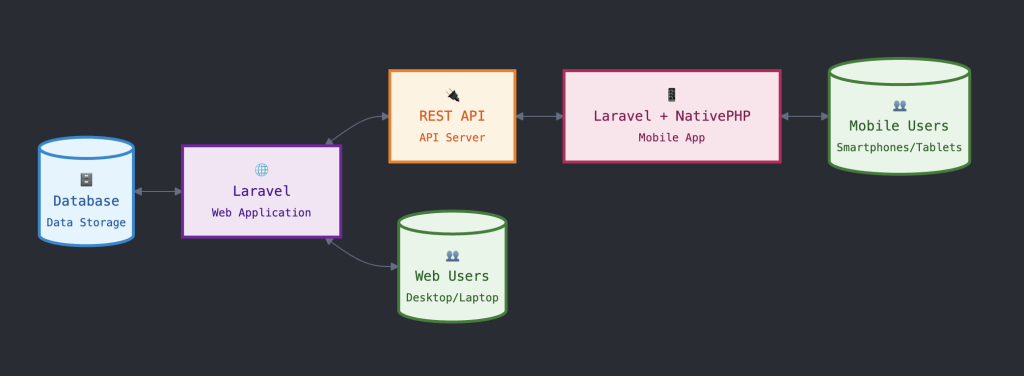
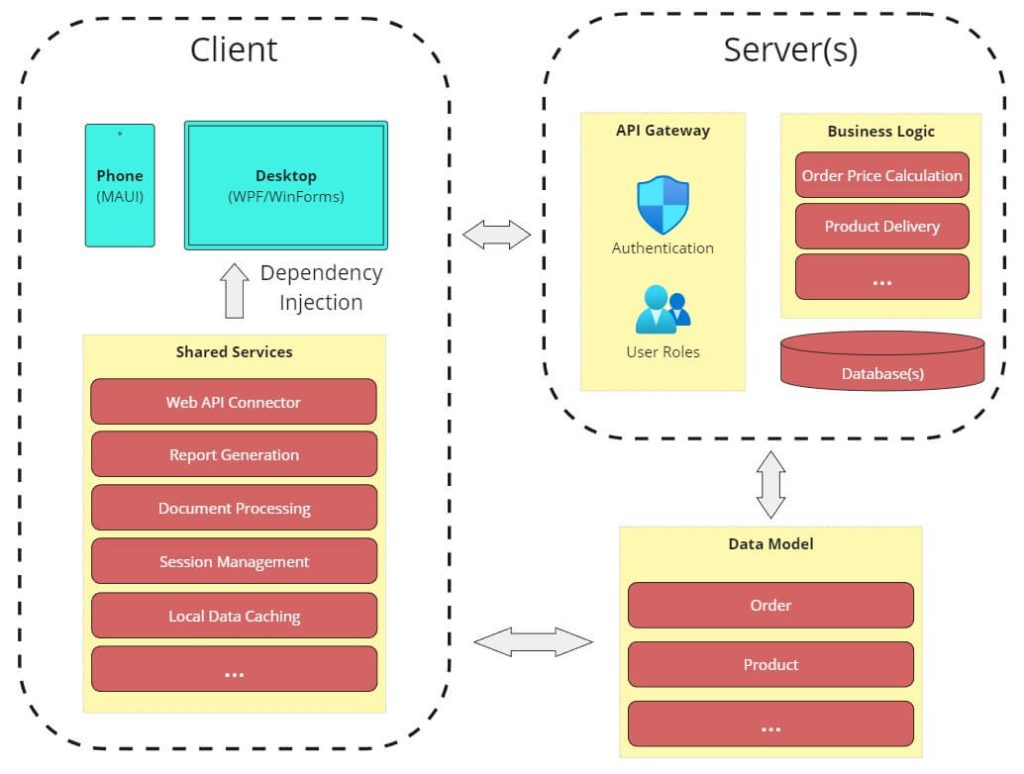
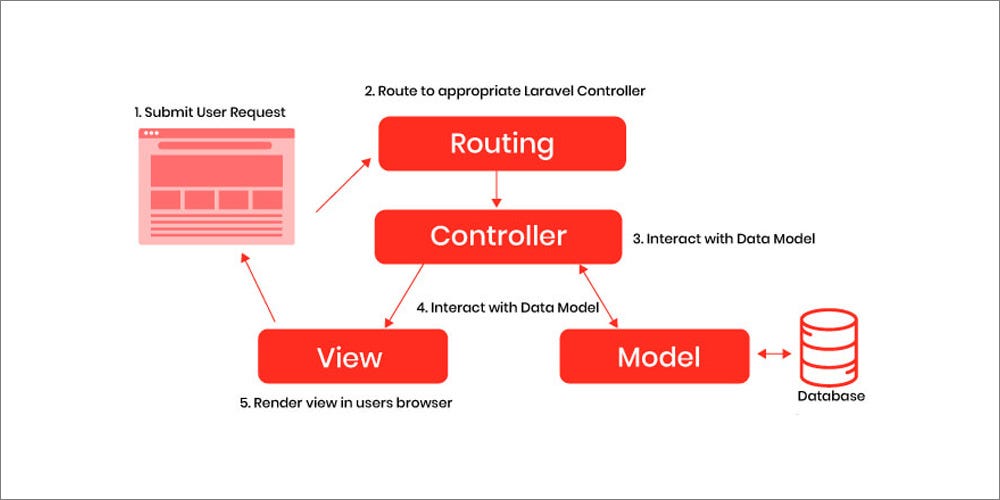
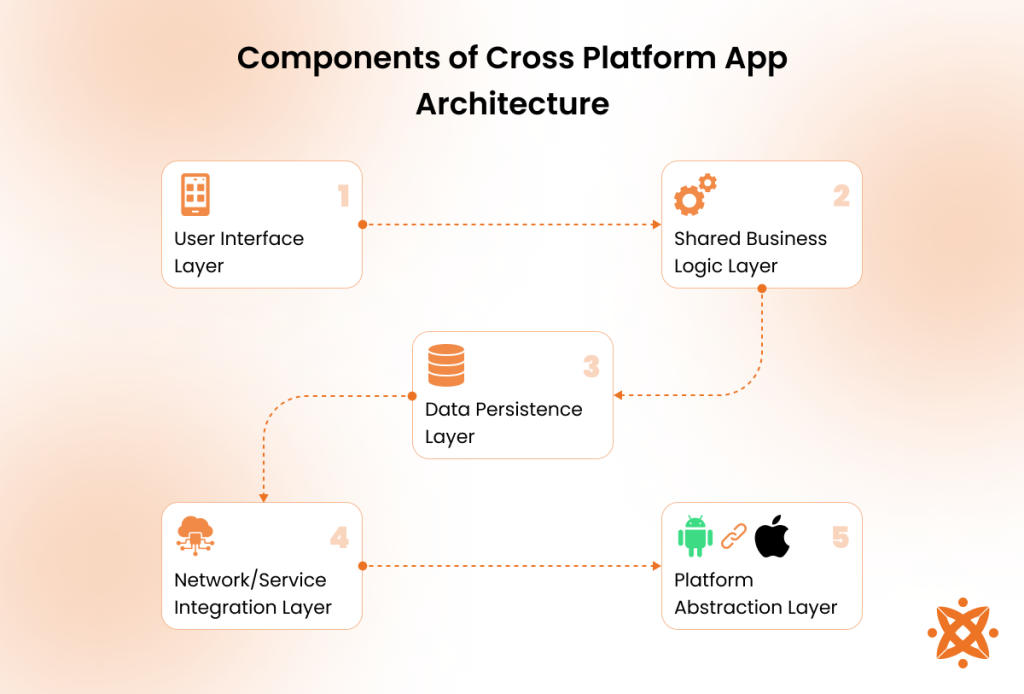
At its heart, the PHP Trinity is about separation of concerns.
The Core Layer: Shared Logic
Everything that defines your application lives here:
- Business rules
- Database models
- Validation logic
- Role and permission systems
- Payment processing
- Reporting calculations
- Notification workflows
This layer does not change across platforms.
Whether a user logs in from a browser, a desktop app, or a mobile device, they are interacting with the same core system.
This eliminates duplication.
The Interface Layer: Adaptive Presentation
The user interface may vary slightly depending on context.
A desktop app may include:
- Native menus
- System tray access
- Drag-and-drop file interactions
A mobile app may emphasize:
- Responsive layouts
- Touch-friendly components
- Device-based navigation
But the UI remains a presentation layer — not a logic layer.
That distinction is crucial.
When logic leaks into frontend systems, duplication begins. The PHP Trinity keeps intelligence centralized in Laravel.
The Platform Layer: Native Wrapping
This is where NativePHP enters.
Rather than rewriting your application in another language, NativePHP wraps your Laravel project in a native container. It allows the app to:
- Access the local file system
- Display native notifications
- Run background processes
- Integrate with system-level APIs
From a user perspective, the application behaves like a native desktop or mobile app. From a developer perspective, it is still Laravel underneath.
This alignment reduces cognitive overhead and protects architectural integrity.
Desktop Applications Without Leaving PHP
Historically, desktop software required stepping outside the PHP ecosystem.
That often meant:
- Learning Electron
- Managing Node dependencies
- Packaging JavaScript builds
- Handling cross-platform binaries
While powerful, that approach introduces an entirely new toolchain.
With NativePHP, the Laravel developer remains within familiar territory.
The desktop version of the app is not a rewrite. It is an extension.
This has enormous implications for internal tools, SaaS dashboards, reporting systems, and enterprise platforms that benefit from:
- Offline capabilities
- Direct file manipulation
- System-level notifications
- Dedicated installable applications
The shift is subtle but transformative: PHP developers can now deliver native-feeling desktop software without abandoning Laravel.
Mobile Without Reinventing Your Backend
Mobile development has long been considered a separate discipline.
Even when APIs are shared, teams often:
- Duplicate validation logic
- Reimplement authentication flows
- Recreate permission systems
- Mirror business rules in JavaScript or Dart
This introduces risk. When logic exists in two places, divergence is inevitable.
The PHP Trinity minimizes that risk by ensuring that the Laravel application remains the authoritative system.
Instead of rebuilding the brain of the application for mobile, you expose and adapt it.
The result is consistency.
Users receive the same behavior across devices because the same code governs the experience.
Operational Advantages for Teams
Beyond technical elegance, the unified codebase model delivers strategic benefits.
Simplified Team Structure
Instead of separate web, desktop, and mobile teams, a unified Laravel team can manage the ecosystem.
This reduces communication friction and shortens development cycles.
Faster Feature Delivery
When business logic is centralized:
- New features are implemented once
- Validation changes propagate instantly
- Bug fixes apply across platforms
There is no need to coordinate synchronized releases across separate stacks.
Reduced Maintenance Burden
Maintenance is not just about fixing bugs. It includes:
- Security updates
- Dependency management
- Compliance adjustments
- Performance optimization
A single codebase reduces surface area and simplifies audits.
When the PHP Trinity Makes the Most Sense
Not every application needs this model.
However, it is particularly powerful for:
- SaaS platforms
- Subscription services
- CRM systems
- ERP software
- Internal dashboards
- Data-driven productivity tools
- Reporting platforms
- POS systems
These systems are primarily logic-heavy rather than graphics-heavy. They rely on structured workflows, authentication, and database interactions — exactly where Laravel excels.
For high-performance gaming engines or hardware-intensive creative tools, native stacks may still be preferable.
But for business software, the PHP Trinity is a strong contender.
The Psychological Shift for Developers
There is also a mindset transformation happening.
For years, PHP developers were told:
“If you want desktop or mobile, switch stacks.”
That assumption created invisible ceilings.
With Laravel and NativePHP combined, those ceilings begin to disappear.
Developers can:
- Expand product reach
- Maintain architectural clarity
- Preserve expertise
- Avoid ecosystem fragmentation
It is not about replacing every other framework. It is about broadening what Laravel can responsibly handle.
Challenges and Considerations
No architecture is perfect.
Teams adopting this model should consider:
- Performance testing across platforms
- Platform-specific UI expectations
- Packaging and distribution workflows
- Offline data synchronization strategies
Careful design remains essential.
The strength of the PHP Trinity lies in thoughtful architecture, not blind duplication.
A Glimpse Into the Future
The boundaries between platforms are blurring.
Users expect seamless transitions:
- Start work on desktop
- Continue on mobile
- Monitor via browser
A unified Laravel core supports this naturally.
Instead of stitching systems together through APIs and replicated logic, you maintain a single authoritative source.
As Laravel continues evolving and NativePHP matures, the idea of PHP powering complete application ecosystems becomes less surprising and more practical.
Final Reflections
The PHP Trinity is not merely a technical trick.
It represents a broader principle:
- Centralize intelligence.
- Distribute interfaces.
With Laravel as the foundation and NativePHP as the bridge, developers can build modern multi-platform systems without multiplying complexity.
- One codebase.
- Web, desktop, and mobile.
- Unified architecture.
For Laravel developers seeking to scale their products intelligently, this approach offers clarity in a landscape that has long favored fragmentation.
And sometimes, progress isn’t about adding more stacks — it’s about simplifying them.