





As digital products scale, infrastructure complexity quietly becomes the bottleneck.
Servers require maintenance. Capacity planning consumes time. Traffic spikes introduce risk. Operational overhead begins to compete with product innovation.
This is where serverless architecture shifts the conversation.
Instead of asking,
“How do we manage our servers?”
The better question becomes:
“How do we design systems that scale automatically and let our engineers focus on delivering business value?”
Serverless is not a trend. It is an architectural strategy.
What “Serverless” Actually Means (Without the Buzzwords)
Serverless doesn’t mean there are no servers. It means your team doesn’t manage them.
In a serverless model:
- Infrastructure provisioning is automated
- Applications execute only when triggered
- Scaling happens automatically
- Billing aligns with execution, not idle time
With services like AWS Lambda, code runs in response to events such as API requests, scheduled tasks, or data changes — without the need to provision virtual machines.
For engineering teams, this removes:
- Server capacity planning
- Manual infrastructure scaling
- OS patch management
- Idle resource cost
The result? Faster iteration cycles and lower operational friction.
How Laravel Fits Naturally into Serverless Architecture
Many assume serverless is limited to lightweight microservices. In reality, modern PHP frameworks like Laravel adapt extremely well to event-driven execution.
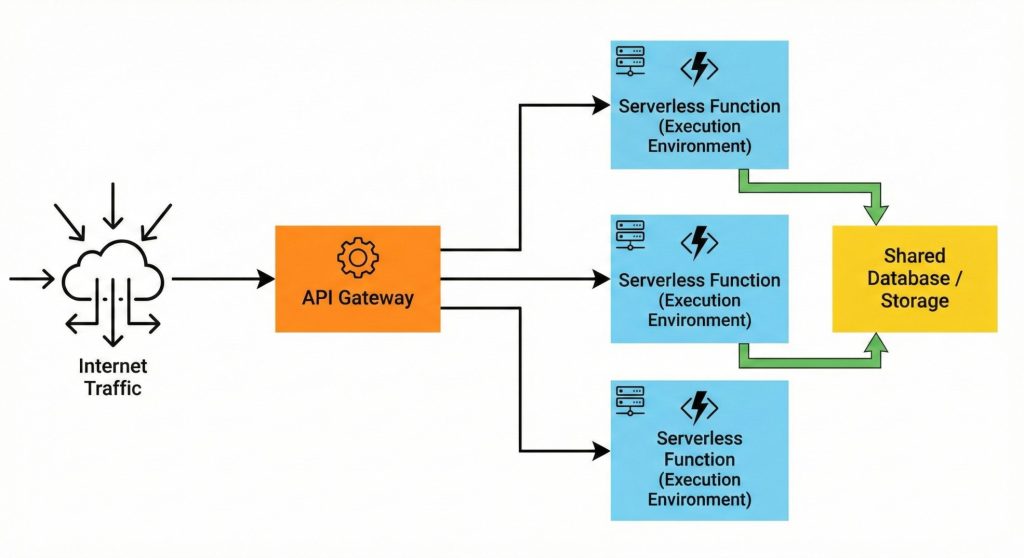
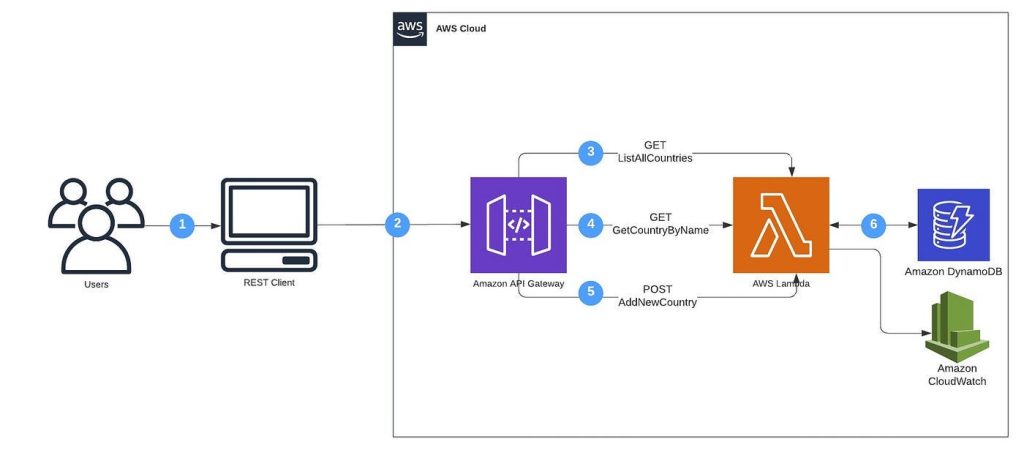
A typical request flow looks like this:
Client Request → API Gateway → Lambda Execution → Laravel Logic → Data Store → Response
With Amazon API Gateway routing incoming requests, Laravel application logic can execute within Lambda’s runtime environment.
But success depends on architectural discipline.
Key Considerations
1️⃣ Stateless Design
Serverless functions do not retain memory between executions. Sessions, caching, and storage must be externalized.
2️⃣ Event-Driven Thinking
Queues, scheduled jobs, background processes — Laravel already supports these patterns natively.
3️⃣ Deployment Strategy
Applications are packaged into versioned artifacts, enabling controlled rollouts and reliable rollback.
When implemented intentionally, Laravel retains its development simplicity while gaining automatic scalability.
Supporting Image: Serverless Request Lifecycle
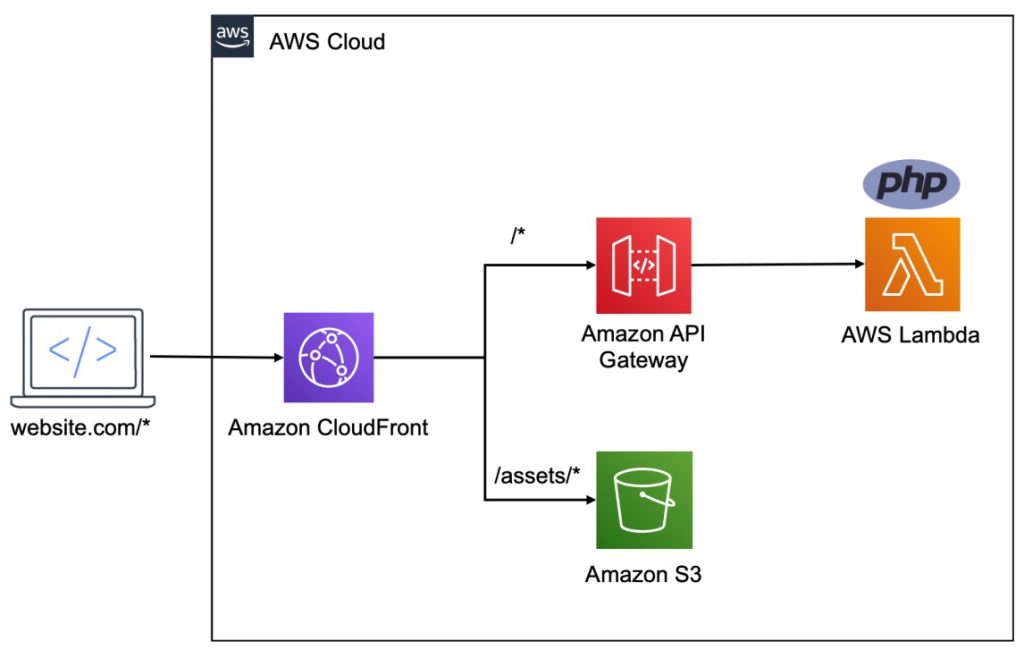
Caption:
Typical request lifecycle in a Laravel-based serverless architecture.
When Serverless Is the Right Strategic Choice
Serverless is powerful — but not universal.
It works exceptionally well for:
✔ Event-Driven Systems
Applications triggered by user actions, external integrations, or data updates.
✔ Variable Traffic Patterns
Systems with unpredictable demand avoid paying for idle infrastructure.
✔ Microservices & APIs
Independent services scale based on individual workload.
✔ Background Processing
Scheduled jobs and automation tasks execute efficiently.
✔ Data Ingestion Pipelines
Real-time or batch processing scales naturally with input volume.
In these scenarios, serverless reduces operational overhead while increasing responsiveness.
When Serverless May Not Be Ideal
Balanced engineering requires acknowledging trade-offs.
Serverless may not suit:
- Long-running computational tasks
- Systems with consistently high traffic
- Highly stateful applications
- Execution time-sensitive processes
- Architectures requiring strict vendor independence
Choosing serverless should always align with workload behavior — not industry hype.
The Business Impact of Going Serverless
Beyond technical convenience, serverless architecture delivers measurable business outcomes.
🔹 Reduced Infrastructure Overhead
Engineers focus on product logic rather than server management.
🔹 Automatic Scalability
No manual intervention during traffic spikes.
🔹 Cost Alignment
Pay-per-execution models align infrastructure cost with actual usage.
🔹 Faster Time-to-Market
Simplified deployment pipelines shorten release cycles.
🔹 Built-In Resilience
Managed infrastructure improves availability and fault tolerance.
For growing businesses, these benefits translate into operational agility and competitive advantage.
Production-Grade Implementation Requires Discipline
Serverless simplifies operations — but it does not eliminate architectural responsibility.
Successful implementation requires:
- Observability from day one
- Least-privilege security design
- Infrastructure as code
- Performance optimization (including cold-start management)
- Workload validation before deployment
Architecture remains a strategic decision.
Final Thoughts: Architecture Is a Business Decision
Serverless architecture is not a universal replacement for traditional infrastructure.
It is a strategic tool — best suited for systems that benefit from automatic scaling, event-driven execution, and operational efficiency.
When combined with disciplined engineering practices, Laravel applications deployed in a serverless environment can deliver:
- Predictable scalability
- Controlled operational cost
- Faster delivery cycles
- Resilient system behavior
Organizations that treat architecture as a strategic decision — rather than a deployment detail — gain long-term adaptability and measurable competitive advantage.