





In today’s digital-first world, businesses are under constant pressure to deliver fast, reliable, and engaging digital experiences across devices. Customers expect the convenience of mobile apps with the accessibility of the web. Traditionally, companies have been forced to choose between building a responsive website or investing heavily in native mobile applications for Android and iOS—often resulting in higher costs, longer development cycles, and fragmented user experiences.
This is where Progressive Web Applications (PWAs) come into play. At Vbridge, we see PWAs as a strategic solution that bridges the gap between web and mobile, enabling businesses to achieve faster Return on Investment (ROI) while maintaining high performance and user satisfaction.
This blog explores what PWAs are, why they matter, how to create one, and how they help organizations unlock faster ROI.
What is a Progressive Web Application (PWA)?
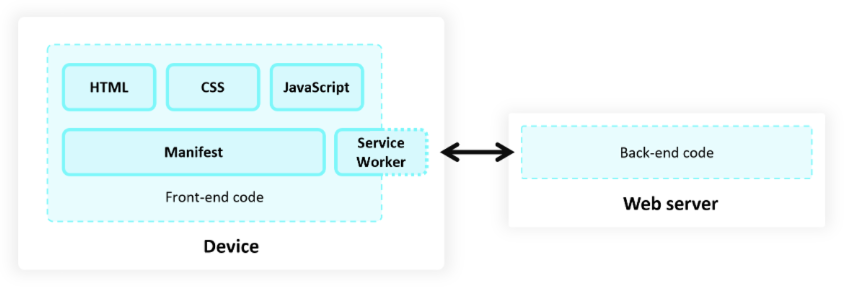
A Progressive Web Application is a web application built using standard web technologies such as HTML, CSS, and JavaScript, but enhanced with modern browser capabilities to deliver an app-like experience. PWAs combine the best features of websites and native mobile apps.
Key characteristics of a PWA include:
· Progressive – Works for every user, regardless of browser choice
· Responsive – Adapts seamlessly to desktop, tablet, and mobile screens
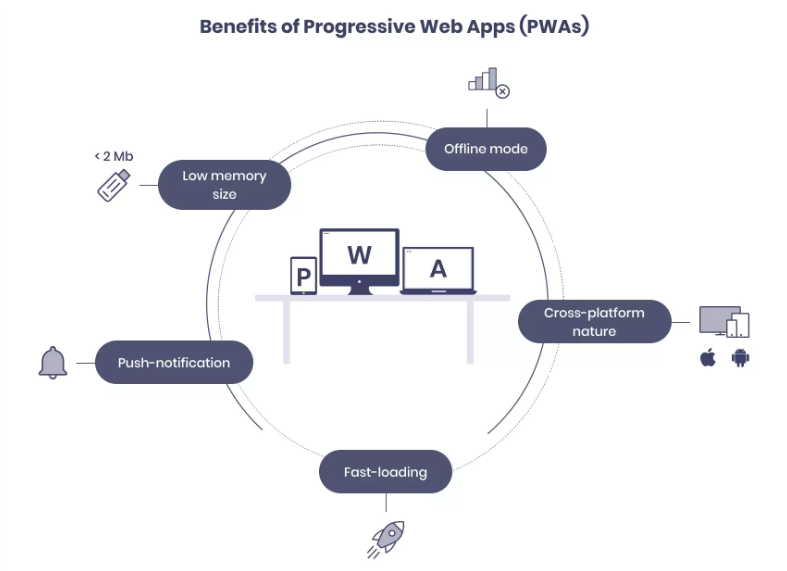
· Reliable – Loads instantly, even in poor or offline network conditions
· Fast – Responds quickly to user interactions
· Engaging – Feels like a native app with features such as push notifications and home screen installation
In simple terms, a PWA looks and behaves like a mobile app but is accessed through a web browser—without requiring users to download it from an app store.
Architecture of a Progressive Web App
Why Businesses Need PWAs Today
1. One Codebase, Multiple Platforms
With PWAs, businesses can build a single application that runs across: – Desktop browsers – Mobile browsers – Android and iOS devices.
2. Faster Time to Market
Native app development often involves long development cycles and app store approval processes. PWAs can be deployed instantly via the web.
3. Improved User Engagement
PWAs support features such as: – Push notifications – Offline access – Home screen installation. These features improve user retention and engagement, similar to native apps, without the friction of app downloads.
4. Lower Total Cost of Ownership
By reducing platform-specific development, infrastructure complexity, and maintenance overhead, PWAs significantly lower the total cost of ownership – directly contributing to improved ROI.
How PWAs Bridge the Web and Mobile Gap
Traditionally, websites and mobile apps served different purposes:
· Websites offered reach and accessibility
· Mobile apps delivered performance and engagement
PWAs bridge this gap by offering:
· Web reach – Accessible via URLs and search engines
· App-like experience – Smooth animations, gestures, and native-like UI
· Offline capability – Seamless usage even without internet access
· Device integration – Camera, geolocation, and notifications
This convergence allows businesses to deliver a consistent and high-quality experience across all devices without duplicating effort.
How to Create a Progressive Web Application (Brief Overview)
Creating a PWA does not require rewriting your entire application. Many existing web apps can be progressively enhanced into PWAs. Below is a simplified overview of the process.
1. Start with a Modern Web Application
A PWA is built on top of a standard web app. Frameworks commonly used include: – React – Angular – Vue.js – Laravel + Blade / React / Vue (popular in enterprise projects).
2. Enable HTTPS
Security is mandatory for PWAs. HTTPS ensures secure communication and is required for features like service workers and push notifications.
3. Add a Web App Manifest
The Web App Manifest is a JSON file that defines how the app appears and behaves when installed on a device. It includes: – App name and short name – Icons – Start URL – Theme and background colors – Display mode (standalone, fullscreen).This allows users to add the app to their home screen.
4. Implement Service Workers
Service workers are the backbone of PWAs. They run in the background and enable: – Offline functionality – Caching strategies – Faster page loads – Background sync
With proper caching, users can access content even without an internet connection.
5. Optimize Performance
Performance is critical for PWA success. Best practices include: – Lazy loading assets – Minimizing JavaScript bundles – Using efficient caching strategies – Optimizing images and APIs
6. Add Optional Enhancements
To further enhance user engagement, PWAs can include: – Push notifications – Background data sync – App-like navigation and gestures
Real-World Use Cases
Many global organizations have adopted PWAs to drive growth and efficiency:
· E-commerce platforms for faster checkout and better mobile conversions
· Healthcare applications for offline access and secure data handling
· Enterprise dashboards for cross-device accessibility
· Content platforms for improved engagement and reach
At Vbridge, we help enterprises evaluate where PWAs fit best within their digital ecosystem and implement solutions aligned with business goals.
Conclusion
Progressive Web Applications represent a powerful shift in how digital experiences are built and delivered. By seamlessly blending the reach of the web with the engagement of mobile apps, PWAs bridge the web–mobile gap efficiently and cost-effectively.
For businesses focused on speed, scalability, and ROI, PWAs offer a compelling path forward. At Vbridge, we leverage modern web technologies and best practices to help organizations adopt PWAs that drive measurable business outcomes – faster launches, lower costs, and higher user satisfaction.
As customer expectations continue to rise, investing in PWAs is not just a technical decision – it’s a strategic one.