






Managing ecommerce performance can quickly become complex.
With multiple products, campaigns, and constantly changing metrics, it’s easy to miss opportunities that directly impact revenue.
This is where an AI-powered ecommerce audit report becomes essential
In this article, we introduce an AI-driven audit approach that helps businesses uncover hidden insights, identify gaps, and take actionable steps to improve performance.
What Is an Ecommerce Audit Report?
An ecommerce audit report is a structured analysis of your digital commerce performance that evaluates:
- Product coverage across campaigns
- Marketing performance
- Spend efficiency
- Conversion trends
- Optimization opportunities
Unlike traditional reports that only present data, modern audit systems use AI to generate insights and recommendations.
Why Most Ecommerce Accounts Underperform
Many businesses face common challenges:
- Not all products are being actively promoted
- Budgets are not allocated efficiently
- High-performing products lack sufficient investment
- Campaign structures are inconsistent
- Limited visibility into product-level performance
Without a structured audit, these issues often remain unnoticed.
Introducing an AI-Powered Audit Approach
An AI-powered audit system is designed to simplify complex data and provide meaningful insights.
This approach is especially useful for:
- Businesses not ready for full automation
- Agencies managing multiple clients
- Brands looking for performance clarity
What Insights Does the Audit Provide?
1. Product Coverage Analysis
AI enables advertisers to deliver highly relevant ads based on:
- Total products in catalog
- Actively promoted products
- Unpromoted products
👉 Helps identify missed revenue opportunities.
2. Campaign Structure Overview
- Automated vs manual campaigns
- Campaign distribution
- Structural gaps
👉 Provides clarity on how marketing efforts are organized.
3. Product-Level Performance Analysis
- Sales performance by product
- Conversion trends
- Efficiency metrics
👉 Identifies top-performing and underperforming products.
How AI Generates Actionable Insights
AI (including Large Language Models) processes structured data such as:
- Product data
- Campaign data
- Performance metrics
It then generates:
- Human-readable summaries
- Performance insights
- Strategic recommendations
Instead of raw numbers, users get clear, actionable guidance.
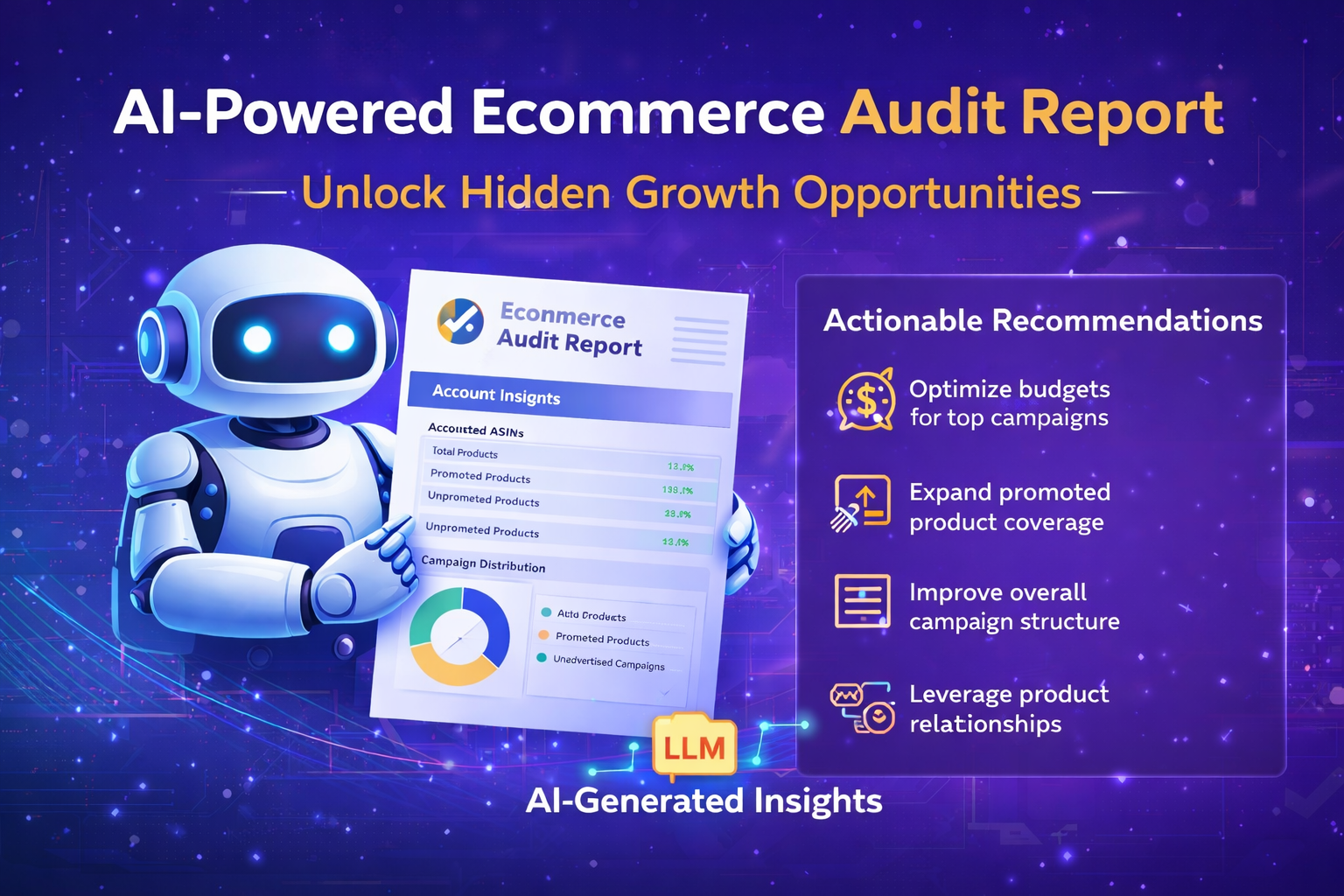
Key Recommendations from the Audit
Optimize Budget Allocation
- Increase investment in high-performing areas
- Reduce wasteful spend
Expand Product Coverage
- Promote unlisted or inactive products
- Launch campaigns for uncovered items
Improve Campaign Structure
- Refine campaign grouping
- Align targeting with performance
Leverage Product Relationships
Strengthen cross-selling opportunities
Promote related or complementary products
Bridging the Gap Between Manual and Automated Marketing
Not every business is ready for full automation.
An AI-powered audit helps by:
- Providing data-driven insights
- Highlighting improvement areas
- Supporting better decision-making
This enables a gradual shift toward more advanced strategies.
Benefits of an AI-Powered Audit
- Identify hidden growth opportunities
- Improve marketing performance
- Save time on manual analysis
- Make smarter, data-driven decisions
- Gain a clear view of overall performance
Who Should Use This?
- Ecommerce businesses with large product catalogs
- Marketing teams managing multiple campaigns
- Agencies handling multiple clients
- Brands looking to scale efficiently
Conclusion
Running ecommerce campaigns without regular auditing limits growth potential.
An AI-powered audit transforms complex data into meaningful insights and clear actions.
By combining data with AI, businesses can:
- Understand current performance
- Discover new opportunities
- Make smarter decisions to scale